Skip to content
In South Florida, your property’s exterior is often an extension of your living space. From luxurious poolside patios to statement-making driveways, these areas are meant to be enjoyed and admired.
Pavers are a top choice for homeowners wanting to upgrade these spaces, but they require routine cleaning and sealing to maintain their strength and beauty in our tropical climate.
Let’s dive into the ins and outs of paver cleaning and sealing in South Florida and explore the best ways to protect your home’s hardscaping for years to come.
The Importance of Paver Maintenance in South Florida
Most pavers are remarkably durable, but South Florida’s climate tests even the toughest materials.
As you surely know, harsh sun, frequent rain, high humidity, and storms cycle through our region, stressing pavers with heat, moisture, and wear. Over time, this can break down even the strongest hardscaping if proper maintenance isn’t performed.
Skipping routine maintenance can lead to paver problems, including:
- Fading color
- Poor water drainage
- Border erosion
- Shifting or sinking pavers
- Water absorption
- Mold or algae growth
- Staining, especially on patios and driveways
- Noticeable wear
- Weed and grass growth in paver joints
Left untreated, these issues affect more than appearance. They gradually weaken pavers, leading to cracks and further breakdown.
On the other hand, basic maintenance, such as deep cleaning and professional sealing, will help preserve your pavers’ aesthetics and create a barrier against the elements. You’ll also want to sweep your pavers regularly between professional cleanings to keep them free of debris.
The Paver Cleaning & Sealing Process
Cleaning and sealing pavers is a relatively straightforward process on the surface, but each step plays a vital role in maintaining your hardscape. Professionals follow a careful process to avoid damage and achieve long-lasting results.
Overall, the cleaning and sealing process takes two to three days, depending on the project.
Step 1: Inspection
Before work begins, the paver surface is inspected for:
- Cracks or damage
- Heavy staining
- Missing joint sand
- Sunken areas
If repairs are needed, they’re addressed at this point. This is also where mold, algae, and other stains or growth are noted so they can be properly handled during cleaning.
Step 2: Deep Cleaning
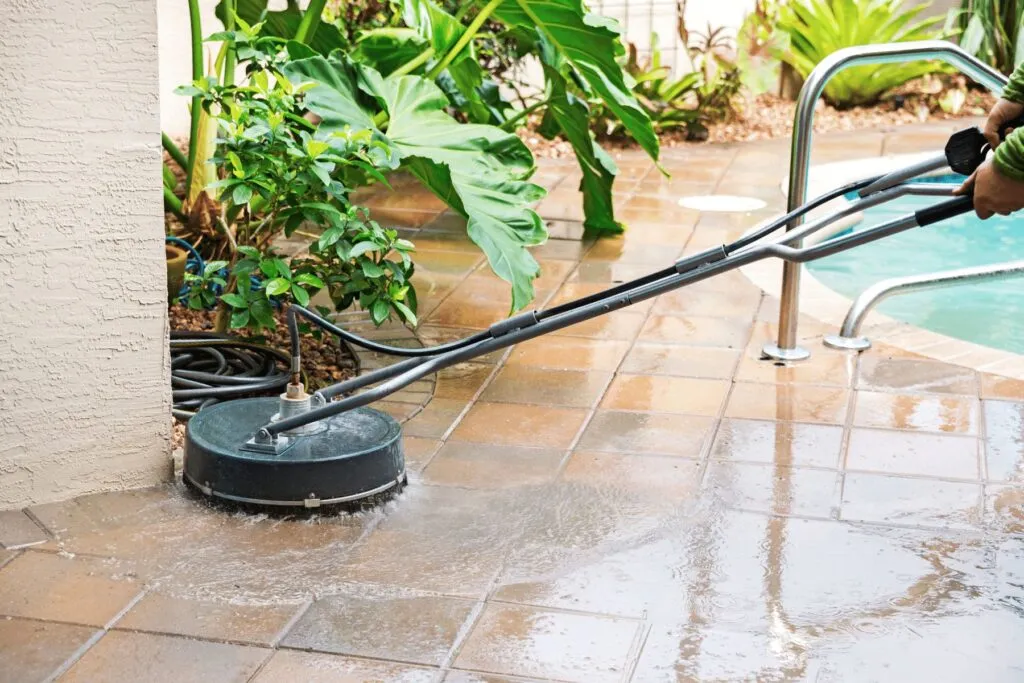
Specialized power-washing equipment removes dirt, mold, and other buildup while protecting the integrity of your pavers. Equally important is professional expertise, as correct pressure, nozzle selection, and technique prevent etching and other paver damage.
For tougher stains or persistent organic material buildup, a targeted cleaning solution can be used to ensure a thorough, eco-friendly clean without compromising the pavers or surrounding surfaces.
After cleaning, pavers should be allowed to dry for at least 24 hours.
Step 3: Joint Sanding
The original joint sand is often partially removed during the cleaning process, so it must be replaced.
To do so, your contractor will sweep new polymeric sand into the joints to stabilize pavers and prevent plant growth. The sand will be set in place using a vibratory plate or roller, and then the excess will be blown away with a leaf blower to prevent haze during sealing.
Once in place, polymers in the sand are activated by a light application of water. They must then dry, with fast-cure sands allowing for quick turnaround. Proper product selection is key here, as some sands have a 30-day cure window.
Step 4: Apply Sealer
At this point, the sealer will be applied using a pump sprayer or roller.
Most products call for two thin coats to be applied, with at least two to three hours of drying time between coats. Care must be taken to avoid puddling, which can cause uneven coloring or a sticky finish.
Proper application is critical for long-lasting protection and a professional finish. When done correctly, sealing also makes future cleaning easier by preventing dirt infiltration, algae growth, and more.
After sealing, the area should remain off-limits to foot traffic for at least eight hours and to vehicle traffic for a minimum of 48 hours (with 72 being preferred). Additionally, no rain should be expected for 24 to 48 hours to ensure the sealer cures properly.
Choosing the Right Paver Sealer
Some sealers provide a natural, matte finish, while others create a glossy, wet-look sheen that enhances the pavers’ color.
Sealers also differ in protective capabilities. Some products are formulated to resist UV fading, making them ideal for full-sun areas of your yard, while others protect against oil stains and heavy wear, making them a better choice for driveways.
The two main types of paver sealer are:
- Penetrating Sealers (Natural Look): Without changing the surface appearance, these sealers infiltrate into the paver to protect against water, stains, and salt infiltration. They have a natural matte finish.
- Film-Forming Sealer (Wet Look): Creating a glossy appearance, these sealers create a protective layer on the pavers instead of infiltrating as deeply as penetrating sealers. These provide excellent protection but need careful application to avoid peeling.
Choosing the right sealer for your pavers depends on the paver material, the desired end look, and the specific environmental challenges the area may face, such as mildew growth or frequent water exposure.
How Often Should Pavers Be Sealed?
Most pavers should be resealed every two to three years in South Florida.
This timeline can change, however, based on:
- Frequent rain
- Severe storms
- Pool chemical exposure
- Direct sunlight rather than partial day exposure
- Heavy driveway or foot traffic
Signs your pavers need to be resealed include:
- Fading color
- Increased algae growth
- Loose joint sand
- Water soaks into the pavers instead of beads
Proper sealing is essential for protecting your pavers and maximizing their lifespan.
When Is the Best Time to Seal Pavers?
South Florida’s warm climate allows for year-round paver maintenance, but the best time is during dry weather. We know that can be tricky in South Florida.
Professional paver companies usually schedule sealing during periods when the pavers can be fully dried before application and remain dry for at least 24 to 48 hours after.
Choosing the Right Paver Company in South Florida
It’s critical that you select a high-quality paver company when you need your pavers resealed. While high-quality contractors will use the proper techniques and achieve good results, low-quality outfits may use improper cleaning methods or make expensive mistakes.
When choosing a paver sealing company, look for contractors with:
- Many years of experience
- In-house crews, rather than subcontractors
- Paver expertise
- A good local reputation
A company with a long history in the region will understand how South Florida’s climate affects pavers and what products are best suited for which areas.
Pup Pavers & Turf has been serving the South Florida area since 2006. We exclusively use in-house crews, and we specialize not only in paver cleaning and sealing but also in complete paver installation, repair, and other maintenance.

Paver Cleaning & Sealing in South Florida: FAQ
Maintaining your home’s hardscaping comes with plenty of questions. We’ll answer some of the most common questions homeowners have about paver cleaning and sealing below, so you can keep your spaces looking great.
How much does it cost to clean and seal pavers?
Pricing varies depending on the size of the area, the condition of the pavers, and the type of sealant used.
For professional cleaning and sealing, a small patio can cost between $300 and $550, while a driveway can be anywhere from $800 to more than $3,000. DIY cleaning and sealing can run between $150 and $400 for materials or equipment rentals.
Do you need to clean pavers before sealing?
Yes. Thoroughly cleaning pavers before application is a vital step in the sealing process. Proper cleaning removes dirt, mold, algae, and stains that may not be visible but can interfere with the sealer’s effectiveness.
After cleaning, the pavers must be dried for 24 to 72 hours to ensure the sealer adheres properly for lasting protection.
What do professionals use to clean pavers?
Professionals use a range of products and equipment to clean pavers, including specialized detergents to treat stains from oil, mold, or mildew. Most commonly, they rely on pressure washers equipped with spinning nozzles and paver-safe cleaning solutions to gently remove algae, dirt, and other build-up without damaging the surface.
How long should paver sealing last?
Sealer lifetime varies by location and exposure, but in most cases, pavers should be resealed every two to three years to maintain appearance and protection.
Can I seal pavers myself?
Pavers can be a DIY project, but mistakes can quickly become expensive to fix. Applying sealer to damp pavers, using the wrong type of product, or overapplying the sealant can lead to a range of issues, from hazy or blotchy finishes to sticky, peeling surfaces.
Should you pressure wash pavers?
While seasonal pressure washing can help remove built-up dirt, algae, and staining, it must be performed with care to avoid causing damage. Using a low-pressure setting and a wide fan tip allows you to clean the surface without being overly harsh on the materials.
Improper pressure washing techniques can strip away the joint sand that keeps pavers in place and potentially damage the pavers themselves.
Pup Pavers & Turf: Here to Help With Paver Cleaning & Sealing in South Florida
With regular maintenance like cleaning and sealing done right, your pavers can stay vibrant, protected, and ready for years of South Florida fun.
Ready to refresh your pavers? Contact Pup Pavers & Turf to discuss your project. We offer paver sealing services in Wellington, Ocean Ridge, West Palm Beach, Jupiter, and the rest of the Greater Palm Beach area.