Skip to content
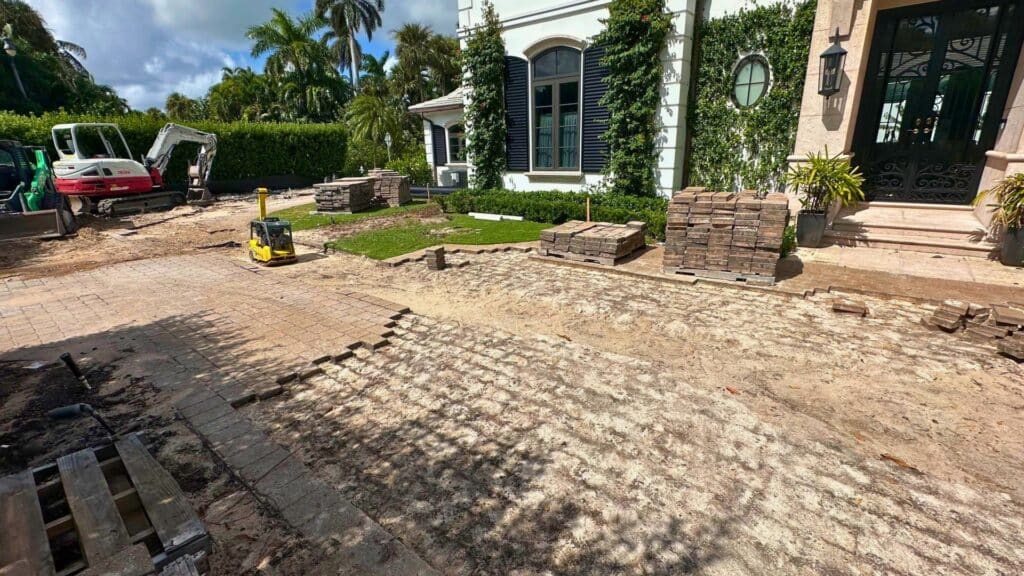
You’ve picked out the pavers, settled on a color, and can already picture how much better the driveway is going to look. Or maybe you’ve finally decided to kick the patchy, stubborn grass to the curb to make room for beautiful artificial turf that actually stays green.
Then comes the question that can bring everything to a screeching halt: What does the HOA have to say about it?
If you live in an HOA community in Palm Beach County, your paver or turf project may need approval before installation begins. Your association could have rules about materials, colors, placement, drainage, and even the paperwork you’ll need to submit.
Sorting out those rules from the get-go can save you from the headache of ordering the wrong materials or having to rework your plans (or worse, watching your installation date get bumped further down the calendar).
We’ll try to help you know what to expect when navigating your HOA below.
Do You Need HOA Approval for Pavers or Artificial Turf?
If you live in an HOA community, it’s safe to assume your paver or turf project needs a quick check with the association before work begins. Many HOAs require homeowners to get approval before making exterior changes, especially ones that alter the property’s appearance.
That could include a new paver driveway, patio, walkway, or pool deck, as well as replacing natural grass with artificial turf. Even swapping old pavers for something new could require approval if you’re changing the color, pattern, material, or size of the paved areas.
The tricky part is there isn’t one set of HOA rules for all of Palm Beach County. Your community’s governing documents and architectural guidelines will determine what needs approval and what the association wants to see before signing off.

What Your HOA May Want to Review Before Approving the Project
Getting HOA approval usually involves more than sending over a quick note that says, “Heads up, we’re getting new pavers!” The association may want enough detail to see what the finished project will look like and how it could affect the surrounding property.
Exactly what gets reviewed depends on your community’s rules, but these are some details that may come up:
Paver Material, Color, and Pattern
That charcoal border you love might not make the HOA’s approved color palette. Associations may have standards for the type, color, size, or pattern of pavers you use on driveways, patios, walkways, or other visible areas.
Check those requirements before falling in love with a particular design or ordering materials. If your HOA has approved products or colors, knowing that upfront can narrow down your choices and prevent an unwelcome redesign later.
Project Location, Size, and Layout
Your HOA may want to see where the pavers or turf will go and how much of your property the project will cover. This can be especially important if you’re widening a driveway, adding a new walkway or patio, or changing the footprint of an existing hardscape.
You might have to supply a property survey, site plan, or simple project drawing so the architectural committee can review dimensions, property boundaries, and the proposed layout.
Artificial Turf Type and Appearance
Artificial turf comes in plenty of varieties, and your HOA may have something to say about which ones make the cut. Rules can address the turf’s appearance, product specifications, edging, installation location, or how it transitions into surrounding landscaping.
Florida law, however, limits an HOA’s ability to restrict artificial turf that isn’t visible from the parcel frontage, an adjacent parcel, an adjacent common area, or a community golf course. So, if you’re installing artificial turf in a low-visibility area, you may not need HOA approval.
But front-yard installations do require approval in most cases. They may also receive particular attention since they can noticeably change the appearance of a home from the street.
Drainage and Water Flow
A beautiful new driveway loses some of its charm if every summer storm sends water somewhere it shouldn’t go. South Florida gets roughly 40 to 60 inches of rain per year, so drainage is an important consideration during both the approval and installation process.
Your plans may need to account for grading, runoff, and how water moves through or around the new surface.
Your HOA will also want to ensure that you will have a properly prepared base installed. That way, water won’t pool around your home or collect underneath the installation.
What You May Need to Submit With Your HOA Application
Once you know your project needs approval, it’s time to give the HOA enough information to actually make a decision. Requirements vary by community, so your association’s application and architectural guidelines should still serve as your checklist.
That said, here are a few things you might need:
| Your HOA May Request | What It Shows |
| Architectural application | Basic details about the proposed project and the changes you want to make |
| Property survey or site plan | Where the pavers or turf will go, along with the proposed dimensions and layout |
| Material or product information | The manufacturer, product, specifications, and other details about the pavers or artificial turf you selected |
| Colors, patterns, or samples | What the finished pavers or turf will look like so the HOA can compare it with community standards |
| Photos or project drawings | A visual of the existing area and/or the changes you’re proposing |
| Contractor information | The contractor completing the work, potentially including licensing or insurance information if your HOA requests it |
| Drainage or grading details | How the project will handle water and avoid creating drainage issues on your property |
A missing document can turn a straightforward review into a game of email tag. Before submitting anything, make sure you’re using the current application and have included everything your particular HOA requests.
HOA Approval vs. Palm Beach County Permits: What’s the Difference?
Getting the thumbs-up from your HOA doesn’t mean you’re free and clear to start digging. HOA approval and local permitting are entirely different things, and your project may need one, both, or neither depending on the work involved.
Homeowners Association Approval
HOA approval deals with your community’s rules. The association may review the appearance, location, materials, dimensions, and other details of your proposed paver or turf project to make sure it meets the neighborhood’s architectural standards.
Florida law prohibits an HOA from requiring a building permit as a prerequisite for reviewing an architectural request.
Palm Beach County Permits
Permits deal with local government requirements. What you’ll need can depend on the type and scope of the project as well as where your home is located.
Palm Beach County includes both unincorporated areas and individual municipalities, so the permitting authority and requirements aren’t necessarily the same for every homeowner.

How Long Should You Plan for HOA Approval?
HOA approval probably won’t be the longest part of your project, but it can throw a wrench in the schedule if you leave it until the last minute. Review times vary by association, and some architectural committees only review applications at certain meetings or on a set schedule.
A complete application can keep things moving. Missing a product sample, site plan, contractor document, or other required item may send the application back to you for more information or add another round of waiting.
It’s a good idea to start the approval process well before you schedule installation or arrange for materials to be delivered.
If the HOA requests a different paver color, asks you to adjust the layout, or has questions about the turf you chose, you’ll have time to make those changes without watching your project calendar unravel.
And once you have approval, hang onto it. Your contractor should know exactly what was approved so the finished project matches the plans your HOA signed off on.
How Much Can HOA Requirements Add to a Paver or Turf Project?
The HOA application itself may not be the biggest line item in your paver or turf budget. The decisions that come out of the approval process, though, can change what you ultimately spend. That’s another good reason to tackle approval before you order materials or lock in the project details.
Depending on your community and project, added costs could include:
- Application or review fees
- Costs for surveys, site plans, or other required documents
- Different materials, as required by the HOA
- Drainage or site work needed to comply with requirements
- Deposits, as required by the HOA
- Changes after work begins
The best time to find out your HOA has a problem with your pavers or turf is before you’ve paid for the project or submitted a deposit. Getting the requirements nailed down early gives you and your contractor a much clearer picture of the actual project cost.
How to Make the HOA Approval Process Easier
A little planning can keep the HOA portion of your project from becoming the part everyone groans about. The biggest advantage is knowing what your association expects before you’ve committed to a design, ordered materials, or circled an installation on the calendar.
Here’s what you can do to streamline things:
- Read the architectural guidelines first. See what your HOA says about pavers, artificial turf, exterior modifications, approved materials, and application requirements before making final selections.
- Get the current application and checklist. HOA forms and requirements can change, so work from the latest information provided by your association.
- Confirm local permit requirements separately. HOA approval and government permitting are different boxes to check.
- Choose materials with HOA rules in mind. It’s much easier to adjust a paver color or turf product while you’re still shopping than after you’ve ordered it.
- Gather everything the application requires. Plans, product specifications, samples, contractor information, and drainage details can all help the committee understand exactly what you’re proposing.
- Submit before scheduling installation. Give yourself room for the review process and any questions or requested changes that come back.
- Keep your written approval and approved plans. Once work begins, everyone should be working from the same version of the project.
- Stick to what was approved. If the design changes before or during installation, check whether the HOA needs to review the revision before moving ahead.
Frequently Asked Questions
HOA rules can get surprisingly specific once you start planning an exterior project. Your own association’s governing documents should always be the final word, but these answers can help you know what to check before your paver or turf installation gets underway.
Can my HOA tell me what color pavers I can use?
Yep, if your HOA’s governing documents or authorized architectural standards give it that authority. You may be limited in the paver colors, styles, or patterns you can use, so check the current guidelines before making your final selection.
Can an HOA restrict artificial turf in Florida?
Florida law limits an HOA’s ability to restrict artificial turf that isn’t visible from the parcel’s frontage, an adjacent parcel, an adjacent common area, or a community golf course.
But turf installed in visible areas may still be subject to applicable HOA standards, so check your association’s current rules before choosing a product or location.
Do I need HOA approval to replace existing pavers?
Possibly. Replacing old pavers doesn’t automatically mean the project is exempt from architectural review. Approval may be required if you change the color, material, pattern, dimensions, or layout, and some associations may require review even for a like-for-like replacement.
Can I install artificial turf in my front yard?
That depends on your HOA’s rules and applicable local requirements. Front yards tend to be highly visible, so an association may have stricter standards for turf installed there than in a backyard. Make sure that the location and turf product are allowed before moving ahead.
Can I widen my driveway with pavers if I live in an HOA?
Possibly, but that can vary based on your HOA. Some HOAs have specific requirements for driveway width, such as not allowing the driveway to be wider than the garage.
What happens if I install pavers or turf without HOA approval?
If approval was required, you could be asked to submit the project for review after the fact, make changes, or potentially remove work that doesn’t comply with your association’s rules. Your HOA’s governing documents determine the specific consequences.
Should I get HOA approval before hiring a paver or turf contractor?
You can talk with contractors and start planning the project before HOA approval, but it’s smart to get the required approval before installation begins or you make nonrefundable commitments.
Get Your Paver or Turf Project Off on the Right Foot
The last thing you want is to make it through your HOA approval only to discover the finished project doesn’t match what you submitted. Once you know what your association requires, Pup Pavers & Turf can help you turn those approved plans into a properly installed paver or artificial turf project.

Have an idea for your Palm Beach County property? Contact us today to talk through the project and get an estimate.
Sources & References
- Florida Legislature – “Florida Statutes § 720.3035: Architectural Control Covenants”
Explains the authority homeowners’ associations and architectural review committees have when reviewing proposed property improvements, including requirements related to an improvement’s location, size, type, and appearance.
https://www.leg.state.fl.us/Statutes/index.cfm?App_mode=Display_Statute&URL=0700-0799%2F0720%2FSections%2F0720.3035.html - Florida Legislature – “Florida Statutes § 720.3045: Installation, Display, and Storage of Items”
Outlines limits on an HOA’s ability to restrict artificial turf and certain other property improvements when they are not visible from specified surrounding areas.
https://www.leg.state.fl.us/Statutes/index.cfm?App_mode=Display_Statute&URL=0700-0799%2F0720%2FSections%2F0720.3045.html - South Florida Water Management District – “30-Year Historical Average Rainfall (1991–2020)”
Provides historical rainfall data for South Florida, including annual and seasonal precipitation patterns that help illustrate why drainage is an important consideration for outdoor paver and turf projects.
https://www.sfwmd.gov/weather-radar/rainfall-historical/normal